
I. My First Venture: Like a “Flash Marriage”
After graduating with my bachelor’s degree in 2017, I took a regular job. One day, several colleagues suggested: “Let’s start a company.” I said: “Okay.”
In hindsight, that “okay” was more impulsive than signing a marriage certificate. From 2018 to 2020, the team had conflicting goals—some wanted to build rockets, some wanted to sell tea eggs, and others just wanted a place to pay social insurance. With different mindsets, visions, and original intentions, efficiency was shockingly low. I gradually realized: if crew members on a ship aim for different ports, the faster the ship sails, the farther it drifts from the destination.
At the end of 2020, I quit. Friends asked if I felt upset. I said yes, but continuing down the wrong path is worse—it’s slow poison.
That same year, I was admitted to pursue a master’s degree at the School of Management and Engineering (SME), Nanjing University. As China’s first school dedicated to management and engineering, SME upholds the education philosophy of engineering-management integration, industry-education collaboration, and open cooperation, cultivating a large number of interdisciplinary talents proficient in both engineering and management.
After hearing about my “failed startup,” professors at SME used systematic engineering management thinking to help me map out a complete corporate structure. I still keep that chart today—engineering management does not complicate things; it breaks complex tasks into executable steps.
This is the true meaning of the school motto “Knowledge rewards diligence; responsibility unites us”: it is not calligraphy on the wall, but the footsteps forged by SME alumni through practice.
II. Revowait: Waiting for a “Steadfast” Revolution
On November 22, 2021, Nanjing Revowait Technology Co., Ltd. was founded.
Many people ask about the meaning of “Revowait.” It comes from Revolutionary Wait—waiting for the revolution. We chose this slightly idealistic name to mean we are willing to settle down and focus on technology, preparing silently like before a revolution until we are ready to stand before the world.
Why self-balancing technology?
China has a large number of offshore wind farms. Technicians need to climb towers for maintenance—they approach by boat and then climb. However, waves rock the vessel and the tower; connecting two swaying objects with a plank is not work—it is extreme sports.
Globally, Ampelmann (Netherlands) dominates the market with high prices and near-monopoly over China. Domestically? Zero capability.
I thought: Why? Our workers risk their lives repairing turbines, yet we still rely on imports for safe access to towers? Offshore oil platform crew transfer, material handling, and even future rocket sea-launch support—all these scenarios need self-balancing systems, and China had nothing.
So we chose this direction: to safely transfer people from a swaying vessel to a wind turbine tower. In a broad sense, it is domestic substitution; in a simple sense, it is to ensure every offshore worker goes to work safely and returns home safely.
Many entrepreneurs first focus on market size and profit. These matter, but if you only chase money, you will hardly survive the first three years in hard tech. You must clarify: Who are you creating value for? My answer: for offshore workers braving wind and rain. Money follows value; value never follows money.
III. The Floor in Rugao Is Better Than a Bed in Nanjing
We had a direction, but a revolution needs space. The startup team could not afford a large factory in Nanjing—so we went back to Rugao.
I am from Rugao; my hometown had space and supporting processing resources. Instead of renting a factory in Nanjing, we “borrowed resources to achieve our goals” at home, minimized costs, and invested every penny in R&D.
We developed an intense routine: design in Nanjing during the day, drive back to Rugao in the evening, assemble and debug overnight, sleep on cardboard on the workshop floor for a few hours, ship early the next morning, then return to Nanjing to work. Four people, two private cars, trunks full of servo motors and cables—outsiders thought we were decorators, but we were “guerrilla entrepreneurs.”
Once, a client urgently needed delivery. We debugged in Rugao for two consecutive days and nights, only to find a missing communication cable when loading. I was furious—not about money, but about the two-hour drive back to Nanjing. We sent someone to retrieve it while others finished work. At dawn, we squatted by the truck eating steamed buns and soybean milk, tasting better than Michelin-starred meals, because we saved a night’s hotel cost.
Today, we have our own space in Nanjing, and the team has grown from four to about ten people. But those “Rugao days” left a collective memory: no difficulty is insurmountable—if there is, stay up one more night.
We still lost money in 2024, but it was the most valuable tuition—we completely rebuilt management processes, delivery systems, and the supply chain. Without the “loss” in 2024, there would be no “turnaround” in 2025.
What SME taught me is not how to avoid failure, but how to turn failure into a mandatory system upgrade—you cannot escape it.
IV. NJU Foundation: The Strength of Engineering-Management Integration
Revowait’s survival does not depend on my personal ability, but on the operating system provided by the School of Management and Engineering, Nanjing University.
Many ask: How can an engineering management graduate do hard tech? I say: precisely because I graduated from SME. The school’s engineering-management integrated training breaks disciplinary barriers, enabling me to speak both engineering and management languages.
With clients: I translate technical solutions into requirement lists.
With the team: I break grand goals into executable steps.
In crises: I use systematic thinking to find optimal solutions with limited resources and infinite variables.
From day one, I have regularly updated SME professors on project difficulties, management bottlenecks, and strategic confusion. They use systematic thinking to untangle chaos into clarity. Once, a client revised requirements eight times, pushing the team to collapse. Using modular thinking from SME, I drew a logic diagram on a whiteboard, replacing random “seat-of-the-pants” work with an iterative engineering management process. Implementation kept the project on schedule and achieved record client satisfaction.
This is not personal talent—it is the underlying code implanted by SME.
Beyond the operating system, SME’s strong alumni network is our practical booster. Senior Brother Liu Shuang (Chairman of Tianchuang Robot Co., Ltd.) supported us not with capital, but with orders, resources, strategic guidance, and his decade-long network. He introduced key clients in our early days, took us to industry forums, and helped us avoid pitfalls with his own lessons.
I once said: “We fear we cannot repay your help.” He replied: “SME alumni must support each other—why wait for outsiders?”
I still remember this sentence. Entrepreneurship is not a solo fight, but mutual support among a group.
V. From Dust in Xi’an to Thumbs-Up in Dubai
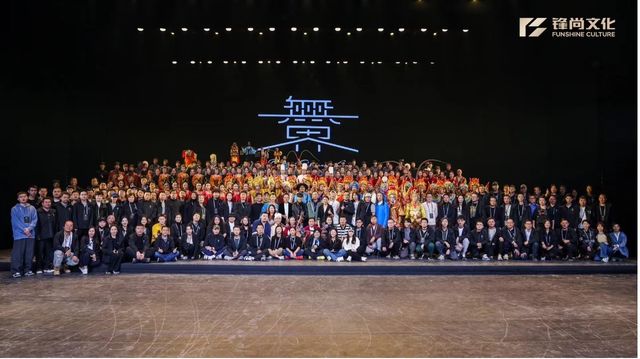
In 2023, we participated in director Zhang Yimou’s Boundless Chang’an—the closing performance of the Belt and Road Initiative Opening Ceremony in Xi’an, which received the warmest applause. No one knew it came from two weeks of sleeping on the construction site.
The gap between artists and engineers is deeper than the Mariana Trench. The director said “it doesn’t feel right”; we asked “what’s wrong”; he said “just the feeling”—it was like talking across different worlds. We adjusted on-site repeatedly: revised structures, rewrote control logic, added safety redundancy. Since performers stood on it, safety had to be 100% guaranteed.
We slept only four to five hours a day for two weeks, barely returning to the hotel, lying on cardboard amid construction noise and dust, sleeping soundly out of exhaustion. Covered in dust, a photo would have been titled “Dusty Engineering Management Professionals”.
After the show, holding a walkie-talkie backstage, my first feeling was relief—not excitement. Pride came later: such a small company completed such a big project.
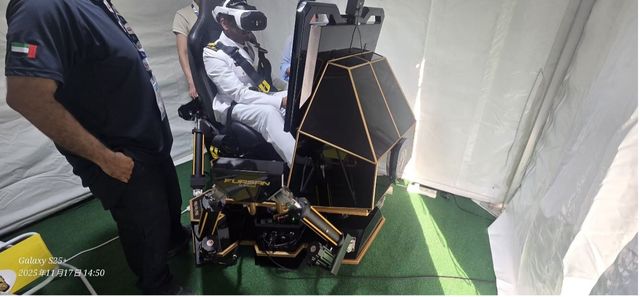
The 2025 Dubai Airshow let me master cross-cultural communication.
A Pakistani visitor was deeply interested in our platform. With heavy accents on both sides, we communicated with gestures for 30 minutes. He asked: “Waves are big—won’t people get seasick?”
I said: “Brother, this is exactly what we solve. The boat rocks violently in waves, but stand on our platform—it remains steady no matter how much the surroundings shake.”
He paused and gave a thumbs-up. I did not know if he understood “steady,” but he clearly understood my gesture.
In Dubai, I realized: whether Chinese, Pakistani, or European, things move forward with hard work, friendly communication, respect for customs, and rejection of prejudice. Cultural differences are superficial; the consensus to get things done is the fundamental agreement.
VI. Marathon, Discipline, and Advice
Many say we are “stable” now that the company is on track. But the most dangerous moment in entrepreneurship is thinking you are stable.
I run every morning, thinking not about “doubling revenue this year,” but: What client pain points have we not fully addressed? Who is the next person to lead independently? My main work is no longer tuning PID or writing code—though I still oversee top-level technical design. I focus more on marketing, project design, and corporate strategy—known as “plugging every leak.”
My most enjoyable “work moments” are morning runs and drives: my only undisturbed “meeting room” all day. Running a marathon is just like entrepreneurship: many start, some quit mid-way; success depends not on speed, but sticking to your own pace to the finish.
Many think entrepreneurship needs passion and courage—true. But more important is discipline. Like setting a stop-loss in stock trading and strictly executing it. In entrepreneurship: passion starts you, courage keeps you going, discipline keeps you alive.
If a junior student from SME asks: I have only 50,000 RMB and a class schedule—how to start a business?
I say: Do not rush to register a company. Cherish your time at SME, and develop the thinking to break complex systems into executable steps beyond classroom knowledge. Spend 5,000 RMB on 10 meals with industry insiders to learn real pitfalls. Use the rest to build a minimum viable product (MVP). Remember: those who dare to start with 60 points often reach the goal earlier than those waiting for 100 points.
More importantly: clarify who you create value for. Entrepreneurship needs profit, but profit should not be the only reason. We chose self-balancing technology not for market size, but to protect workers risking their lives repairing turbines and bring them home safely. This mission is worth pursuing—so we endured the Rugao workshop floor, Xi’an dust, and 2024 losses.
Also: go running. Learn to tell yourself “one more kilometer” when out of breath. This ability is critical for entrepreneurship.
From SME at Nanjing University to Rugao workshops, from Xi’an construction sites to the Dubai Airshow—locations change, but the heart to act, dare, and succeed remains unchanged.
Follow your heart, act bravely.
